
Vivo V70 Elite Review: Flagship Vibes
Story Highlights
The V70 Elite is Vivo's attempt to bust through the midrange ceiling and plant the V-series flag in proper premium territory. It brings a Snapdragon 8-series chip for the first time in V-series history, a completely redesigned body, and a Zeiss-backed triple camera system that Vivo is betting will win over the photography crowd at Rs. 51,999.

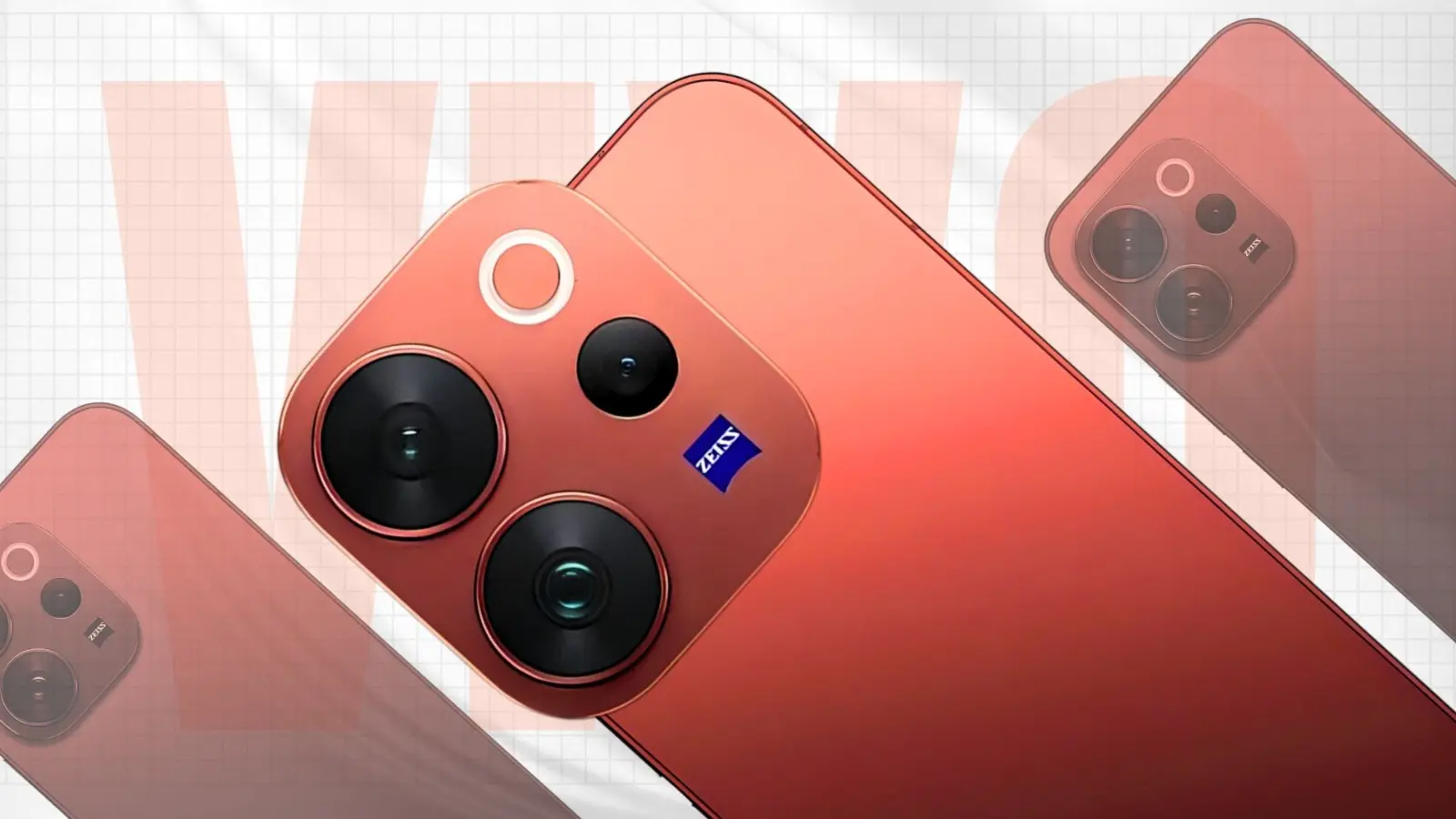
V70 Elite looks genuinely different from any V-series phone that came before it.
Vivo has spent years building the V-series into a solid camera powerhouse with an additional focus on design. These phones were slim, handy and go to options for anyone seeking a camera-centric device in the midrange segment. The V70 Elite is Vivo's attempt to bust through the midrange ceiling and plant the V-series flag in proper premium territory. It brings a Snapdragon 8-series chip for the first time in V-series history, a completely redesigned body, and a Zeiss-backed triple camera system that Vivo is betting will win over the photography crowd at Rs. 51,999.
That price puts it squarely in the arena with the OnePlus 15R, the OPPO Reno 15s, and even Vivo's own X200 FE. All of these are compelling devices with their own strengths. So the question isn't that if the V70 Elite is good? It's that if the V70 Elite good enough to justify choosing it over the competition? So, after spending over a month with the phone, the answer is more nuanced than the marketing brochure would have you believe.
DESIGN AND BUILD: Let's start with what you'll notice first. The V70 Elite looks genuinely different from any V-series phone that came before it. Vivo has ditched the curved glass backs and capsule-shaped camera bumps of earlier generations in favour of a flat design with straight edges, tight corners, and a squarish camera island at the rear. The result is a phone that feels confidently premium. The Passion Red variant that was seeded as the review unit is arguably the most eye-catching of the three available colours. It has a rich, coppery-red tone that catches light in a way that feels intentional rather than garish. It has a matte soft-touch finish on the back that resists fingerprint smudges reasonably well and feels pleasant in hand. The frame is made of aerospace-grade aluminium with a matte texture. It genuinely elevates the in-hand feel. There's none of that slippery polished metal that leaves you anxious about dropping it. At 7.59mm thick and 194 grams, the phone sits in that ideal zone, light enough not to fatigue your hand during long sessions. The Authentic Black version is slightly thinner at 7.4mm and 7 grams lighter at 187g as its back uses glass-fiber instead of glass.
The bezels are impressively slim at 1.25mm. Vivo claims it is the slimmest in the segment. The front, with its punch-hole selfie camera centred at the top and flat display, draws more than a passing resemblance to an iPhone. With rounded corners, thin bezels, flat glass, it in fact looks exactly like the iPhone 17. Though the punch-hole. Whether that resemblance is a compliment or a critique depends on who you ask.
Practical usability is solid. The volume rocker and power button sit on the right side with good tactile feedback. The bottom edge houses the USB-C port (more on that later), a speaker grille, a microphone, and the SIM tray. The top edge has a secondary speaker, and an IR blaster for controlling TVs and ACs without hunting for a remote. At maximum volume, stereo speakers hold up well with clear vocals and decent enough bass for casual listening.
Vivo has upgraded to a 3D Ultrasonic Fingerprint Scanner 2.0, which is a first for the V-series. It's fast, accurate, and works even with wet fingers. The phone carries an IP68 and IP69 rating, which means it can handle submersion and high-pressure water jets. However, for a phone at this price, that's a no brainer. It should have been there and it is.
DISPLAY: The display is a 6.59-inch AMOLED panel with a 1.5K resolution with a 2750 x 1260 pixels density. In daily use, the screen feels sharp and vibrant without you ever having to think about it. What stood out to me the most, though, is the colour reproduction. There's no forced saturation here, nothing feels overdone. Colours are punchy. What your eyes see in the real world is almost exactly what shows up on screen. HDR10+ support is present along with 1 billion colour depth. Whether you're binge-watching a web series or watching random videos, the experience holds up well. Gaming looks equally solid. Whether it's bright outdoor environments or dark indoor scenes, the screen handles both ends of the spectrum confidently. Peak brightness is 5,000 nits. In direct sunlight, everything on the screen remains clearly visible. No squinting, no tilting the phone to find an angle. When indoors, honestly, 50–60% brightness is more than enough.
The 120Hz refresh rate does its job. Scrolling feels smooth and animations are fluid throughout the UI. One thing worth flagging is that this is an LTPS panel, not LTPO. That means the refresh rate won't dynamically drop down to 1Hz the way it does on LTPO panels to save battery. That said, in real-world use, you won't feel the absence of LTPO in the screen experience itself. The bezels are ultra-thin. Vivo claims 1.25mm, which they say is the slimmest in the segment. Looking at the phone from the front, it genuinely looks good. Very iPhone-like. Make of that what you will.
CAMERA: Vivo has been raising its camera game with every phone it puts out and same is the case here. The V70 Elite has a triple rear setup: the main camera is a 50MP Sony LYT-700V sensor with an f/1.88 aperture. The second camera is a 50MP telephoto using the Sony IMX882 sensor, with 3x optical zoom and OIS. The third is an 8MP ultrawide. All three have ZEISS tuning. On the front, there's a 50MP selfie camera. On paper, the setup looks impressive, and in real-world use, from however much I've used it, it delivers.
Shoot with the main camera in daylight and the output is genuinely good. Detail looks sharp in the images across different angles and textures are clearly visible. Even when you zoom in on a photo after the fact, the texture and patterns don't wash out or fall apart. Highlights and shadows are both handled well. Camera-wise, Vivo is genuinely in a league of its own here.
Portrait photography is where this phone truly comes alive. It supports 5 focal lengths: 23mm, 35mm, 50mm, 85mm, and 100mm. So you can shoot a wide environmental portrait or a tight telephoto close-up just like on a DSLR. Subject isolation is beautiful and the background blur feels organic. You'd be forgiven for thinking you shot it on a proper camera. On the telephoto side, you get access to 3x optical zoom with a 50MP sensor. Detail holds up well in zoom shots and even at 5x to 7x, the photos are completely usable and look great on social media. That said, the 8MP ultrawide is the weak link here, no doubt about that. Its performance is average. An 8MP sensor in 2026, on a phone priced above Rs. 51,000, is a genuine let-down.
The 50MP selfie camera takes solid selfies. You get images that are well-exposed and make-you-look-good types. Though shadow detail in trickier lighting can be soft.
PERFORMANCE: For the first time, Vivo has put a Snapdragon 8-series chip into a V series phone. The Snapdragon 8s Gen 3, however, is not the fastest Qualcomm processor in 2026, but it's a genuine flagship-class chip. It changes what the V70 Elite is capable of. It's a 4nm chip paired with LPDDR5X RAM. The UFS 4.1 storage type is actually a significant upgrade, because the V60 came with UFS 2.2, which was noticeably on the slower side.
On paper, the Snapdragon 8s Gen 3 still trails the Snapdragon 8 Gen 3 and Dimensity 9300. Benchmark hunters will find the OnePlus 15R ahead in raw numbers. That said, in day-to-day use, the Vivo V70 Elite’s performance is smooth. Apps open the moment you tap them. No loading, no stutter. Pick up the phone, check WhatsApp, scroll through Gmail, fire up YouTube and nothing slows down. I kept 10 to 12 apps running in the background and the UI stayed completely fluid. RAM options are 8GB and 12GB, with storage at 256GB or 512GB depending on the variant you go with.
For gaming, I played BGMI at Smooth + Extreme settings and the experience was seamless throughout. COD Mobile at 120FPS was equally smooth. One thing I noticed during testing was that after about 45 minutes of gaming, the phone had barely warmed up. Vivo's thermal management has clearly been given some attention here. Even in extended sessions, the warmth never crosses into uncomfortable territory.
Software is OriginOS 6 on top of Android 16. The UI feels polished and well put together. Animations are smooth and customisation options are plenty. Vivo is promising 4 major OS updates and 6 years of security patches. For long-term support, that's good.
Where things get frustrating is the bloatware situation on a Rs. 51,999 phone. Frankly, it’s unacceptable. Several third-party apps come pre-installed, there are ads in the App Store. At this price, that's just not okay.
BATTERY: The V70 Elite packs a 6,500mAh battery. It’s a Silicon Carbon cell which is more efficient than conventional lithium-ion. In my testing with moderate usage, I got around one and a half days of backup comfortably. Charging is 90W FlashCharge, and the charger is included in the box. 0 to 100% takes roughly 50 minutes. Like in some other Vivo phones, V70 Elite has bypass charging fetaure, which powers the phone directly from the charger during gaming sessions without routing electricity through the battery. This reduces heat during extended gaming and helps preserve long-term battery health.
VERDICT: The Vivo V70 Elite is the best V-series phone Vivo has ever made. That much is clear. The Snapdragon 8s Gen 3 finally gives the lineup the performance backbone it has long lacked and the primary and telephoto cameras are among the best you'll find under Rs. 55,000. However, if you're a gamer first and a photographer second, the OnePlus 15R or the iQOO 15R makes more sense at this price bracket. And if performance isn't your top priority and the budget feels tight, the standard Vivo V70 at Rs. 46,999 gives you the same camera system, the same display and the same battery. The only real difference is the chipset.
Trending Videos

Sonipat: Pitbull Ne Bacche Par Hamla Kyun Kiya? Victim Family Recalls Ordeal

AI Can Kill Humans by 2029?

Aesthetic Culture: Gen Z Ko Aesthetic Kyun Dikhna Hai?

Women's Mental Health: What is Postpartum Depression

Kya 2029 Tak Jari Rahega PM Modi Ka Rajyog? Astrology Decoded

Marghat Wale Hanuman Mandir Ka Rahasya

Gurugram Hit & Run: Women Bikers Should Be More Careful?

Can Gen Z Live Without A Phone For One Day?

Swara Bhaskar’s Remarks Spark Controversy!

Operation Safed Sagar Cast on Kargil Stories

Can Gen Z Survive Without Memes? IMPOSSIBLE! Fun or Full-Blown Addiction?

26 Pahalgam Files: Detailed stories of the families in Pahalgam Attack

Archana Puran Singh Responds to Samay Raina: What Is the Debate Really About?