
Moto G67 Power 5G Review: Big Battery, Solid Basics
Story Highlights
The Moto G67 Power 5G is a battery-first 5G phone as it packs a massive 7000mAh cell. It features a 6.7-inch FHD+ 120Hz LCD display and runs on the Snapdragon 7s Gen 2 (4nm). On the camera side, you get a 50MP main camera + 8MP ultra-wide, along with a 32MP selfie camera for social-ready shots.

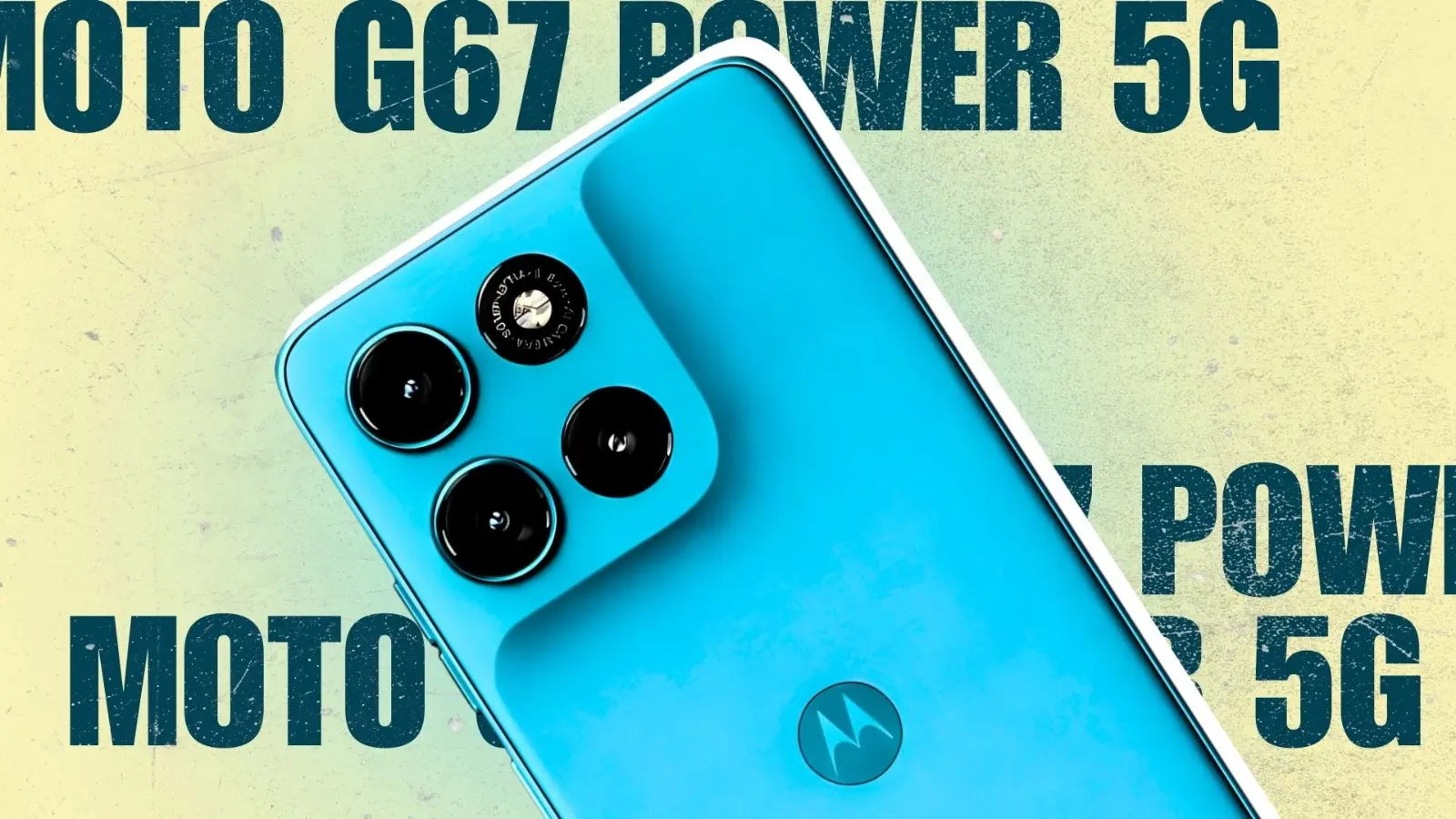
The Moto G67 Power is priced at Ra. 16,999 for its sole 8GB/128GB variant.
Budget phones often follow a predictable formula. Cut corners on the display, compromise on the camera, use last year's processor, but promise good battery life. It's a strategy that works because most buyers in this segment prioritise longevity over luxury. But every so often, a phone comes along that tries to break that mold. Not by doing everything, but by doing a few things exceptionally well. The Motorola Moto G67 Power is that kind of phone. At Rs. 16,999, it doesn't pretend to compete with expensive phones. It knows its lane. A massive 7000mAh battery. Solid build quality. A 50MP dual camera setup with 4K recording. These aren't revolutionary features, but they're executed with purpose.
I've spent the past three weeks with the Moto G67 Power. Not just testing it in ideal conditions, but using it the way someone buying a Rs. 17,000 phone would. I must say that there are trade-offs here, as there always are at this price point. But there are also some goodies. After three weeks, here's what living with this phone actually feels like.
Design and Build: When I first picked up the Moto G67 Power, my immediate impression was that this is a budget phone trying to feel more premium than its price suggests. And in many ways, it succeeds. The build is primarily plastic, but Motorola has dressed it up with its well known vegan leather finish on the back panel. The variant I tested is Pantone Blue. It features a textured leather-like material that's soft to the touch and significantly improves grip. At this price, most phones come with glossy plastic backs that turn into fingerprint magnets within hours. The leather texture of Motorola phones here eliminates that problem entirely and makes the phone comfortable to hold for extended periods.
The Moto G67 Power is a large device. With a 6.7-inch display, it's not small by any measure, but it remains manageable for one-handed use thanks to curved back edges and that leather grip. It’s 8.6mm thick. So, not a slim phone but considering the 7000mAh battery inside, it’s a job well done. The weight tells a different story though. At 210 grams, it's heavy compared to typical 180-gram phones. The weight distribution is balanced, so the phone doesn't feel top-heavy or awkward.
The front design features a center punch-hole camera at the top. Bezels are medium-sized, and the chin is slightly thicker which is standard for budget phones. This isn't a bezel-less experience. Motorola has equipped the display with Gorilla Glass 7i protection, which offers some peace of mind against scratches and minor drops. Additionally, the phone carries an IP64 rating for water and dust resistance. This means it can handle splashes and dust, but don't submerge it. It's splash-proof, not waterproof.
The frame is plastic but feels solid. Motorola has highlighted durability standards here. The phone is MIL-STD-810H tested, meaning it can theoretically withstand extreme conditions like heat, cold, humidity, dust, and drops up to 1.2 meters. I didn't conduct that level of stress testing, but the phone does feel robust in daily use. The dual-camera module sits in a rectangular housing at the top left of the back panel.
One welcome feature is that there's a 3.5mm headphone jack at the bottom. In 2025, that's becoming rare even in budget phones, so it's nice to see Motorola retain it.
Display: The Moto G67 Power features a 6.7-inch Full HD+ display with a resolution of 2400 x 1080 pixels. In this segment, many phones are now offering AMOLED panels, but Motorola has opted for an IPS LCD here with a 120Hz refresh rate. I'll admit, I was initially disappointed by the lack of AMOLED but that’s where the brand chose to cut corners. However, the LCD panel Motorola has used is genuinely good quality. The 120Hz refresh rate makes UI scrolling and animations feel smooth. Scrolling through social media feeds or navigating menus feels buttery with no judder or stutter.
Color reproduction for an LCD is impressive. In practical use, images and videos looked natural, not oversaturated, not dull. Viewing angles are decent. Brightness is another strong point. Motorola claims a peak brightness of 1050 nits, and I didn't struggle outdoors even in direct sunlight. At maximum brightness, text remained readable under harsh sun. For content consumption, the large screen size combined with Full HD resolution delivers sufficient sharpness at approximately 391 pixels per inch. While watching videos, scrolling Instagram Reels, reading articles, the experience was good. Touch response is rated at 240Hz. In gaming, touches felt responsive with no noticeable lag.
Camera: The Moto G67 Power sports a dual rear camera setup. The primary sensor is 50MP, paired with an 8MP ultrawide lens. Up front, there's a 32MP selfie camera. The 50MP primary camera delivers solid results in good lighting. Photos are sharp with sufficient light, and colors are slightly boosted but remain pleasing. Motorola's color tuning used to lean more natural, but recent devices have shifted toward slightly more vibrant output. After processing, photos look appealing with good color reproduction. Skin tones are captured accurately, though the phone does apply slight softening.
The dynamic range is wide. Shots with both bright skies and dark tree shadows came out clear without losing detail in either extreme. The advantage of the 50MP sensor becomes apparent when zooming into photos. Textures like leaves, building patterns, and fabric details are impressively clear for a mid-range phone.
Portrait mode performance surprised me. Edge detection was quite accurate in my tests. Hair and shoulders were cut out cleanly from the background with natural-looking blur. Subject separation is mostly on point, with only minor misses around tricky edges like individual hair strands. Overall, portrait shots are usable and even impressive for this segment.
The 8MP ultrawide camera performs at an average-plus level in daylight. The 8MP resolution isn't high, but at least it's not a useless 2MP depth sensor. For social media posts, photos from this lens will work fine.
The 32MP selfie sensor captures highly detailed images. Skin tones from the front camera appear close to natural, though there's some smoothening applied by default. I turned off beautification to get a more realistic texture, and the results were better. Portrait selfies from the front camera also turned out well with accurate edge detection. Overall, I found the Moto G67 Power to be one of the best camera phones in its segment.
Performance: The Moto G67 Power runs on Qualcomm's Snapdragon 7s Gen 2 processor, a 4nm chip that sits in the upper budget category. The GPU is an Adreno 710. The device comes with 8GB of RAM, which is decent for this price range, paired with 128GB of internal storage. There's a virtual RAM option as well, though like most virtual RAM implementations, it doesn't make a dramatic difference. In real-world use, performance has been smooth for everyday tasks.
The phone runs a stock-ish Android 15 UI, which is inherently lightweight. Apps open quickly, and UI navigation at 120Hz feels fluid. I juggled calls, WhatsApp, Instagram, YouTube, and Chrome with multiple tabs open, no lag appeared. The 8GB of RAM handles multitasking well. I consistently saw 10-12 apps in the recent menu, and reload issues were minimal.
On the gaming front, my expectations were limited as the Snapdragon 7s Gen 2 is a capable mid-range chip, but it's not flagship-level. I tested Call of Duty Mobile on high graphics settings with maximum frame rates. Gameplay was quite smooth, with only slight stutters during heavy explosion scenes. Overall, it's easily playable. BGMI ran well at HD settings, but pushing it to Ultra HD caused frame drops, so I kept it at HD/High for a better experience.
After about 40-45 minutes of intensive gaming, the phone got slightly warm, but it never became uncomfortably hot. For casual gamers and moderate users, this performance level is more than adequate.
The Moto G67 Power ships with Android 15 out of the box. Motorola's UI has always leaned heavily toward stock Android, and that tradition continues here. The experience is nearly pure Android. The app drawer, notification shade, and overall interface feel very similar to a Pixel device.
Now, what irritated me is the presence of bloatware apps like Document Reader, PDF Reader, and games like Block Blast, Bubble Shooter, and Candy Crush. Sure, you can uninstall them, but that misses the point. Why is Motorola ruining that pristine Stock Android experience by shoving these apps down our throats? It just doesn't make sense.
Motorola's Moto Actions and gesture controls are present, adding useful functionality without cluttering the experience. Features like the double-chop for flashlight and double-twist for camera are convenient shortcuts that actually get used.
However, there's again a disappointment, and this time on the software support front. Motorola is promising only one major Android update (to Android 16) and three years of security patches. This is underwhelming, especially when competitors like Samsung now offer three to four years of major updates for their mid-range A-series devices. Three years of security patches is acceptable, but having support extend to Android 17 would have been better.
Battery: This is where the Moto G67 Power truly lives up to its name. The 7000mAh battery is massive. With moderate usage like social media, calls, messages, some YouTube, and light photography, I consistently got around two days of battery life. On heavier usage days with gaming, navigation, and extended camera sessions, the phone still comfortably lasted a full day to a day and a half.
Charging is where there's again a minor compromise. The phone supports 30W fast charging, which frankly feels slow by 2025 standards. Competitors like Realme and Redmi are offering 67W charging at similar prices. In my testing, the phone took approximately 1 hour and 35 minutes to charge from 0-100%. Given the massive battery capacity, this isn't terrible, but faster charging would have been appreciated.
Verdict: After two weeks with the Moto G67 Power, it's clear who this phone is for. If battery life tops your priority list, this phone delivers emphatically. Beyond that headline feature, the phone is a consistent and reliable performer. The design feels premium with the vegan leather finish. The camera is great for the price. The Snapdragon 7s Gen 2 handles everyday tasks efficiently without breaking a sweat.
There are compromises, of course. The lack of an AMOLED display will be felt only by those who have used OLED panels. The 30W charging feels dated when rivals offer much faster options. And the software support of just one major Android update is disappointing for anyone planning to keep the phone for three or more years.
But those compromises are contextual. For someone upgrading from a phone that's two or three years old, or for someone buying their first smartphone in this range, the Moto G67 Power offers a balanced package with standout battery life. The near-stock Android experience is a relief in a segment often plagued by aggressive software customization.
So, if you need a phone that lasts two days on a single charge, shoots good photos, and doesn't lag during daily use, the Moto G67 Power deserves serious consideration at Rs. 16,999.
)
)
Trending Videos

Sonipat: Pitbull Ne Bacche Par Hamla Kyun Kiya? Victim Family Recalls Ordeal

AI Can Kill Humans by 2029?

Aesthetic Culture: Gen Z Ko Aesthetic Kyun Dikhna Hai?

Women's Mental Health: What is Postpartum Depression

Kya 2029 Tak Jari Rahega PM Modi Ka Rajyog? Astrology Decoded

Marghat Wale Hanuman Mandir Ka Rahasya

Gurugram Hit & Run: Women Bikers Should Be More Careful?

Can Gen Z Live Without A Phone For One Day?

Swara Bhaskar’s Remarks Spark Controversy!

Operation Safed Sagar Cast on Kargil Stories

Can Gen Z Survive Without Memes? IMPOSSIBLE! Fun or Full-Blown Addiction?

26 Pahalgam Files: Detailed stories of the families in Pahalgam Attack

Archana Puran Singh Responds to Samay Raina: What Is the Debate Really About?