
Indoor Pollution Is Worse Than You Think and Stays High All Year, Warns Dyson
Story Highlights
Air pollution is an everyday challenge in many Indian cities. While visible haze grabs headlines, invisible indoor pollutants can be just as harmful, especially since most people spend up to 90% of their time inside, breathing thousands of litres of air each day.

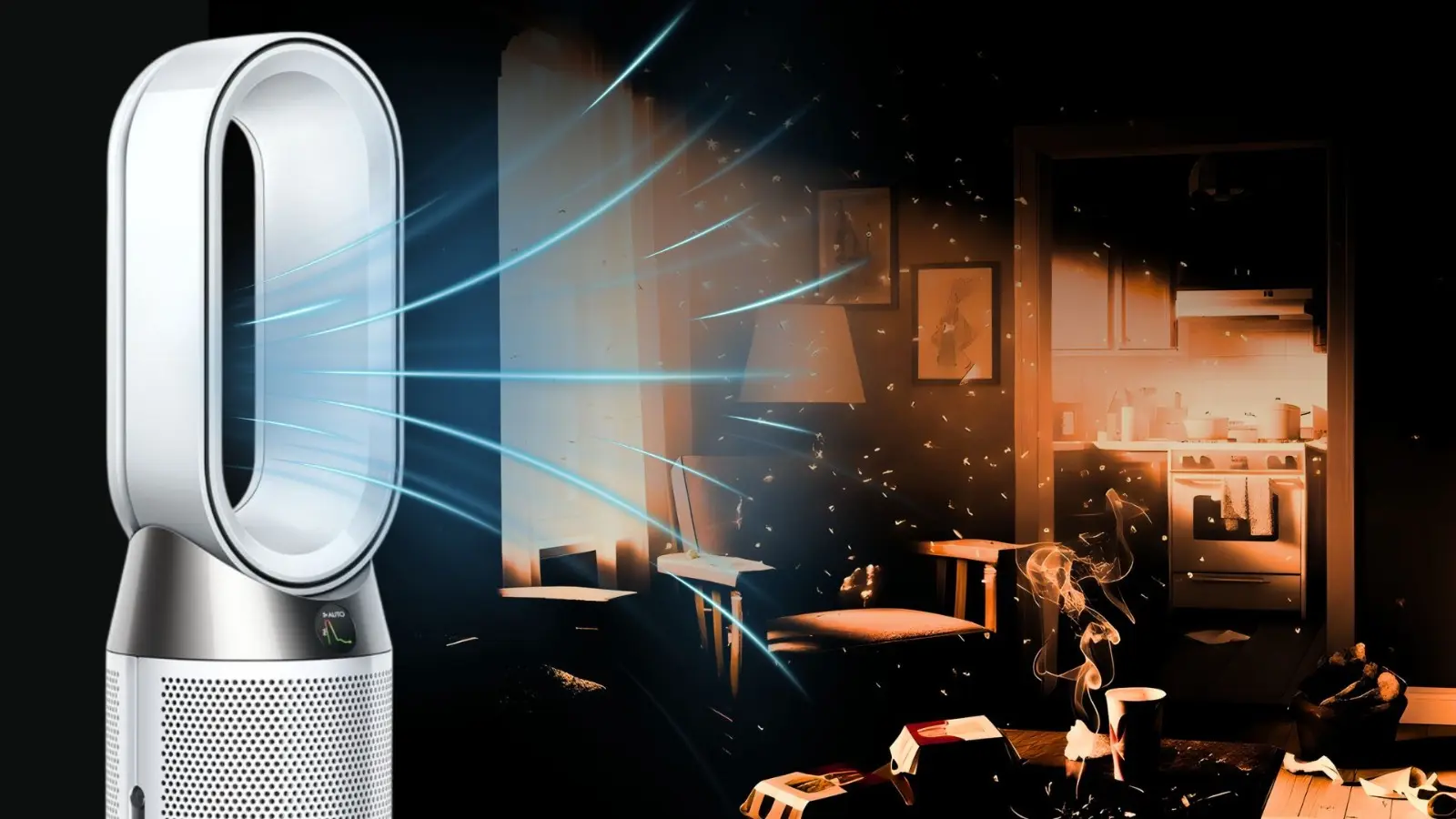
A common misconception is that air pollution is mainly an outdoor problem.
As the familiar grey haze settles over Indian skylines this winter, the conversation inevitably turns to Air Quality Index (AQI) levels and outdoor safety. However, a silent battle is being fought inside our living rooms. With most urban Indians spending up to 90% of their time indoors, the unseen accumulation of ultrafine particles, VOCs from cooking, and nitrogen dioxide (NO2) poses a health risk that often goes unnoticed. Also, when it comes to air purification, the challenge isn't just capturing dust, it is about trapping gas, odors, and particles as small as 0.1 microns.
To understand the engineering behind combating these invisible pollutants, we spoke to Emily Blance, Design Engineer for Environmental Care at Dyson. From debunking the myth that "closed windows mean safe air" to explaining the technology behind the new Dyson Purifier Hot+Cool HP2 De-NOx, Blance breaks down the science of clean air and why filtration is a year-round necessity, not just a winter ritual.
Below is the full Q&A.
Q. As air pollution continues to rise, how is Dyson improving its air purifiers to ensure even greater efficiency and effectiveness?
Air pollution is an everyday challenge in many Indian cities. While visible haze grabs headlines, invisible indoor pollutants can be just as harmful, especially since most people spend up to 90% of their time inside, breathing thousands of litres of air each day. That’s why our engineers focus on understanding how pollutants behave in real living spaces.
Dyson’s latest purifiers are designed to tackle the full spectrum of indoor pollution, from ultrafine particles, like PM0.1, to gases such as VOCs and nitrogen dioxide (NO₂), which enter from traffic or are released during cooking and cleaning. Our machines use fully sealed HEPA H13-grade filtration systems that effectively capture 99.95% of particles as small as 0.1 microns. We have also advanced our filters for capturing gases. The Dyson Purifier Hot+Cool™ HP2 De-NOx features the K-Carbon filter, which is engineered to capture and neutralise a wide range of harmful gases, including VOCs, formaldehyde and 50% more NO2.
We continue to improve filter materials and optimize airflow to extend filter lifespan and ensure consistent performance. Dyson purifiers also use intelligent sensors to monitor both air quality and filter status, with real-time updates available through the MyDyson app, so users have full control, even during high pollution days.
Q. For someone buying their first purifier, what are the most common misconceptions they have about air purifiers or air quality in general?
A common misconception is that air pollution is mainly an outdoor problem. In reality, everyday indoor activities like cooking, using cleaning products or even settled dust in our homes, can introduce pollutants that are often invisible yet persistent. Another misconception is that shutting windows fully prevents outdoor pollution from entering, but fine particles and gases can still find their way indoors through small gaps.
People also tend to associate pollution with winter alone. While winter exacerbates outdoor pollution, indoor air quality can fluctuate throughout the year based on how a home is used. Some believe a purifier only needs to run when pollution is visibly high, but many pollutants, especially ultrafine particles and VOCs, cannot be seen or smelled. Understanding these nuances helps users choose and use a purifier more effectively.
Q. When it comes to maintenance, how frequently should users replace the filters to ensure optimal performance?
As a purifier runs, it captures microscopic particles, allergens, pet dander, and even harmful gases that come from household activities, or building materials. Over time, these pollutants accumulate inside the filter and gradually reduce airflow and filtration efficiency. The frequency to replace your filter depends on how often the machine is used and the pollution levels in the home. In cities with high pollution, like Delhi, or in homes with pets or allergy-prone individuals, filters may need replacement sooner.
Dyson purifiers use intelligent sensors to continuously assess filter life. When the purifier notifies you that it’s time for a replacement, either through the on-machine display or the MyDyson app, it’s important to replace it promptly. This helps maintain the purifier’s ability to capture pollutants effectively and ensures the machine continues delivering clean air throughout the year.
Q. What kind of research and innovation is currently underway at Dyson to shape the next generation of purifiers?
We continuously research how pollutants behave in different climates, and lifestyles, including high-pollution environments like India. This real-world insight influences the next generation of purification technology. Our engineers work extensively on filtration, airflow modelling, designing machines that project purified air farther, more evenly, and with reduced energy consumption.
Testing remains core to our approach. Our purification chambers, equipped with multiple sensors across large volumes, allow us to track not just filter performance but how clean air moves around the room. This is paired with innovations in user experience, intelligent sensing, auto-adjustment modes, quieter operation, and long-life filters that reduce maintenance needs. These combined efforts help ensure Dyson purifiers remain effective in diverse, real-world living spaces.
Q. Is it advisable to keep using an air purifier even when outdoor air quality seems relatively good?
Indoor air quality doesn’t always reflect the conditions outside. Even on days when the outdoor AQI improves, activities like cooking, cleaning, or using scented products can quickly introduce pollutants indoors. Since we spend so much time inside enclosed spaces, these emissions can build up faster than we realise. Dyson purifiers are designed for continuous use, with intelligent sensors that detect changes in indoor pollution levels and automatically adjust airflow. This allows the machine to respond to everyday sources of pollution, ensuring consistent indoor air quality throughout the year not just on visibly polluted days.
Q. Could you walk us through how Dyson’s air purifiers actually clean the air, and what sets the underlying technology apart from others in the market?
Dyson purifiers work through a three-step approach - Sense, Capture, and Project. Intelligent sensors first monitor particulate matter and gases such as PM2.5m, PM10, NO₂ and VOCs, allowing the machine to automatically react to changes in indoor air quality. The fully sealed HEPA H13 filtration system then captures 99.95% of particles as small as 0.1 microns, including PM2.5, allergens, bacteria, and viruses like H1N1, while activated carbon tackles odours and harmful gases.
Finally, Dyson’s Air Multiplier™ technology projects purified air across the entire room, creating a circulation effect that draws in distant pollutants and delivers cleaner air to every corner. Unlike purifiers tested only at the filter level, Dyson engineers test the whole machine to ensure effective, real-world purification.
Q. If a purifier is switched off at night… how much of the purification benefit is lost?
A purifier works most effectively when it runs continuously, especially overnight, as that’s when people spend long hours indoors and pollutants can build up. If the purifier is switched off at night, airborne particles and gases can re-enter your living space or settle onto surfaces, meaning the air quickly loses its filtered quality. In fact, indoor pollutants, like dust, allergens, and VOCs, can accumulate while you sleep, undoing much of the work your purifier did during the day.
The Dyson air purifier range including Dyson Purifier Hot+Cool™ HP2 De-NOx offer auto and sleep modes, designed for overnight use. It is also acoustically engineered to be quiet, ensuring that your sleep does not get disturbed. This helps maintain consistently cleaner air while you and your family rest, ensuring you get the full benefit of continuous purification.
Q. Are Dyson purifiers effective against micro-particles from stubble burning?
Stubble burning releases high levels of fine and ultrafine particles, particularly PM2.5, which can travel long distances and easily enter homes even with windows closed. Dyson purifiers use fully sealed HEPA H13 filtration systems designed to capture 99.95% of allergens and pollutants as small as 0.1 microns, including the micro-particles generated by stubble burning.
Our machines are engineered to deliver whole-room purification, ensuring harmful particles are trapped and not released back into the air. Advanced airflow technology ensures purified air reaches every corner, helping protect you and your family from seasonal pollution events like stubble burning
Q. What is the correct placement of an air purifier in an Indian home to ensure maximum effectiveness?
Dyson purifiers are designed with Air Multiplier™ technology, which sets them apart from ordinary purifiers. It creates powerful and consistent airflow, projecting up to 290 litres of purified air per second across the entire room. This technology ensures that clean air reaches every corner, even when the purifier isn't placed directly next to pollution sources. Combined with 350° oscillation, Dyson purifiers project purified air throughout your space, optimising coverage and ensuring even distribution.
For best results, keep doors and windows closed during high pollution days, and make sure the air purifier’s air inlets and outlets aren’t blocked.
Q. Most brands use “HEPA filters.” What is the actual difference between Dyson’s HEPA setup and regular HEPA filters sold by other companies at lower price points?
Dyson purifiers use fully sealed HEPA H13-grade filtration, meaning not only the filter but the entire purifier is engineered to meet HEPA standards, so trapped particles can’t escape through leaks or gaps. Each machine is tested to capture at least 99.95% of microscopic particles as small as 0.1 microns, including pollen, dust, mould spores, and bacteria. This rigorous whole-machine approach ensures that once pollutants and allergens are captured, they stay securely inside the purifier.
In addition to HEPA, Dyson’s latest purifiers feature advanced K-Carbon filters designed to capture and destroy harmful gases like nitrogen dioxide (NO₂), volatile organic compounds (VOCs), and even formaldehyde. This combination means Dyson purifiers efficiently tackle both particles and gases, providing trusted protection against a wider range of indoor air pollutants.
Trending Videos

Sonipat: Pitbull Ne Bacche Par Hamla Kyun Kiya? Victim Family Recalls Ordeal

AI Can Kill Humans by 2029?

Aesthetic Culture: Gen Z Ko Aesthetic Kyun Dikhna Hai?

Women's Mental Health: What is Postpartum Depression

Kya 2029 Tak Jari Rahega PM Modi Ka Rajyog? Astrology Decoded

Marghat Wale Hanuman Mandir Ka Rahasya

Gurugram Hit & Run: Women Bikers Should Be More Careful?

Can Gen Z Live Without A Phone For One Day?

Swara Bhaskar’s Remarks Spark Controversy!

Operation Safed Sagar Cast on Kargil Stories

Can Gen Z Survive Without Memes? IMPOSSIBLE! Fun or Full-Blown Addiction?

26 Pahalgam Files: Detailed stories of the families in Pahalgam Attack

Archana Puran Singh Responds to Samay Raina: What Is the Debate Really About?